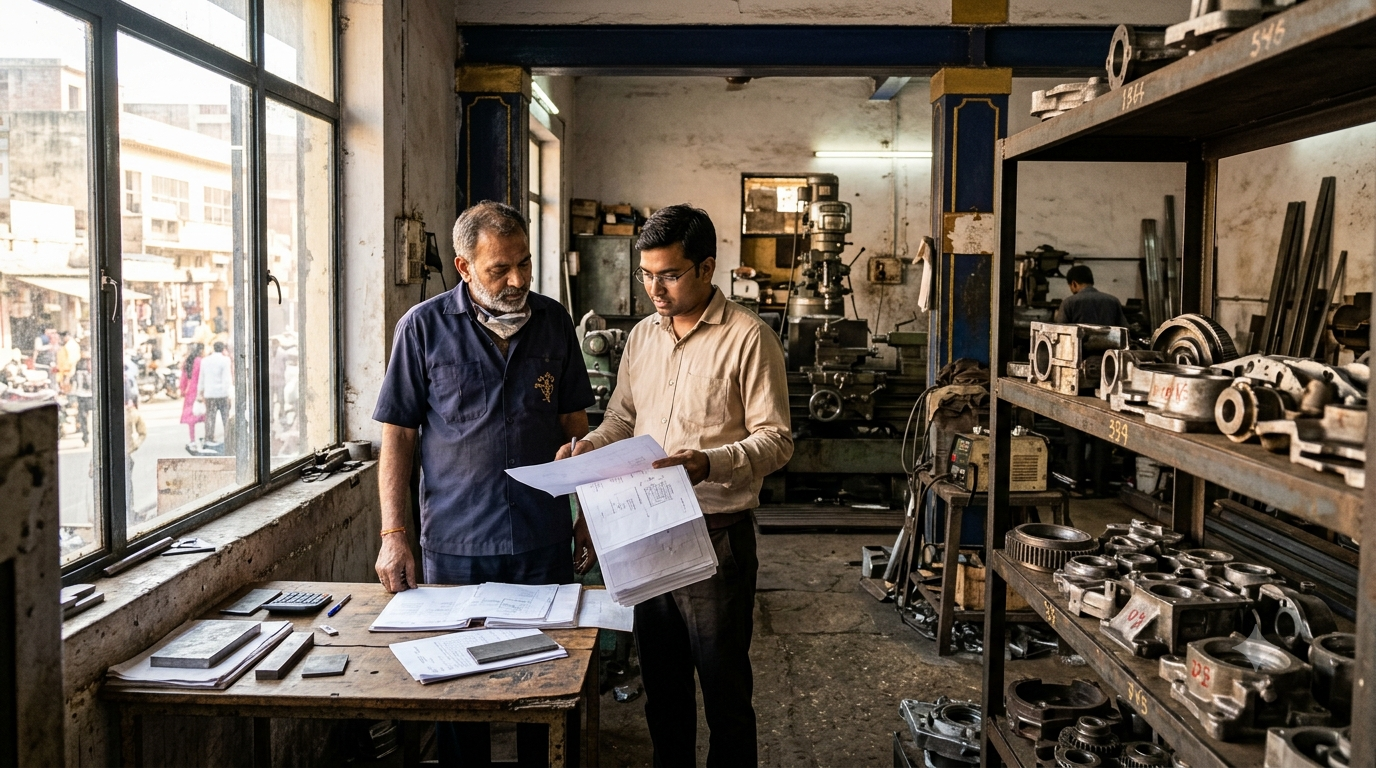
Rajkot's economy is built on small manufacturing: foundries and casting units, machine shops, makers of engines, pumps and auto parts, and the many job-work units that feed them. Most are owner-run, many are micro or small enterprises, and a lot of them own their machinery but little else. That mix decides which loans suit them, and what a lender wants to see.
Start With What the Money Is For
- Buying raw material and waiting for customers to pay: a working capital limit (Cash Credit or Overdraft), sized on your stock and receivables.
- A new machine, a bigger shed or an extra shift's worth of equipment: a term loan. Depending on what you own, it can be unsecured, CGTMSE-backed for eligible micro and small units, or secured against property.
- A large sum when you own industrial land or a building: a loan against property, which usually costs less than unsecured credit.
- Selling to buyers outside the country: export credit, which funds production before shipment and bridges the wait for payment afterwards.
- Bidding for a supply contract or tender: a bank guarantee, which supports your commitment rather than putting cash in your account.
How Rajkot's Main Business Types Usually Borrow
Foundries and casting units. Raw material is a large cost, and its price can move. That ties up working capital and makes stock valuation a point lenders look at closely. Power and fuel costs add to it. Keep working capital and machinery funding separate, and keep stock statements current.
Machine shops, engine and pump makers. Orders come in batches and customers often pay late. A working capital limit is the usual tool, with a separate term loan for new machines. Lenders look at order books and how dependent you are on a few customers.
Auto-parts and ancillary units. Sales often go to larger manufacturers with long payment cycles. If you supply to large corporate or public sector buyers, ask your lender about invoice financing through the TReDS platform. The 2026 amendment to the MSMED Act requires central public sector enterprises to route invoice settlement for MSME purchases through it.
Job-work units and small traders. Job-workers wait for payment from the principal manufacturer, and traders hold stock. Official CGTMSE scheme documents now treat retail and wholesale trade on par with other activities, so a trader who was told the scheme was not for them may want to ask again, subject to Udyam registration and the lender's assessment.
What Lenders Check
- GST returns against bank credits. Unexplained gaps are a common reason for delay.
- Stock and debtor statements that are current and agree with your accounts.
- Dependence on a few buyers or suppliers.
- Existing loans and EMIs as a share of monthly cash flow.
- Credit score and recent enquiries. Several applications in a short time can count against you.
- Insurance on stock and plant, which many working capital facilities expect.
Documents to Keep Ready
- PAN, Aadhaar and business registration papers; Udyam certificate if you have one
- Last 2 to 3 years of financial statements and ITR
- GST returns and 12 months of bank statements for all current accounts
- Stock and debtor statements for working capital
- Quotations for machinery, or a project report for a larger expansion
- Details of existing loans
Avoidable Mistakes
- Using short-term working capital to buy long-life machinery, or the reverse
- Showing one turnover in GST, another in the accounts and another in the bank
- Applying at several lenders one after another instead of shortlisting first
- Comparing only the headline rate and overlooking fees and charges
- Letting insurance on stock lapse where the facility requires it
Common Questions
Which loan suits a small foundry or machine shop in Rajkot?
Usually a working capital limit against stock and receivables, with a separate term loan for machinery. A CGTMSE-backed facility may be worth checking if the unit has no spare property.
Can a Rajkot business get a loan without collateral?
Possibly. Eligible micro and small enterprises can use CGTMSE-backed loans, and businesses with strong banking and GST records can apply for an unsecured business loan. The lender decides.
Can I get a loan against my industrial plot or shed?
Often, subject to clear title, valuation and the lender's policy on industrial property. Rates and the amount depend on the lender and the property.
How long does a business loan take in Rajkot?
It depends on the product and on how complete your papers are. Clean unsecured applications can move within days at some lenders, while secured loans and larger limits take longer because of valuation and legal checks.
Should I use an advisor or go to the bank directly?
Going direct is fine if you know the product and your bank gives a fair offer. An advisor helps most when you are unsure which product fits, were rejected before, or want offers from more than one lender compared.
Talk to SME CFO Services
SME CFO Services is an independent advisory firm based in Ahmedabad that works with clients across Gujarat, including Rajkot, as well as in Mumbai and Pune, through a network of banks and NBFCs. Tell us what your business makes and what you want to fund, and we will say which route makes sense. The first consultation is free and without obligation.
Facebook | Instagram | LinkedIn
📞 +91 70147 40625 (Primary) | +91 96645 00277 (Secondary)
💬 WhatsApp Us | ✉️ smecfoservices@gmail.com
📍 406 Zodiac Plaza, Navrangpura, Ahmedabad 380006
This article is general information, not financial advice. Rates, fees and eligibility vary by lender and change over time. SME CFO Services is an independent financial advisory firm and not a direct lender; loan sanction rests with the respective banks and NBFCs.